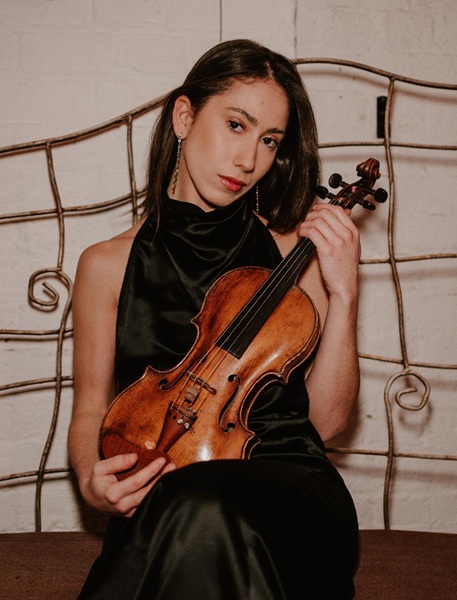
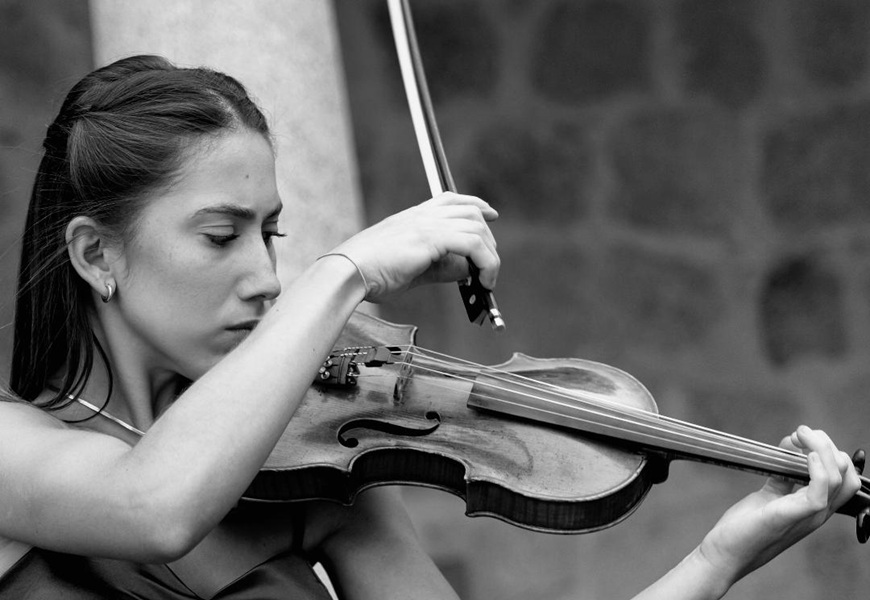
Interview
1- From 2007 to 2013 you attended the music summer course organized each year by the Director of the CEDAM academy in Madrid-Spain at the Farm of San Ildefonso, “Strings in the Air”. How special and influential for you were these summer courses early in your development?
Strings in the Air, organized by CEDAM Academy, was a beautiful summer course I attended from ages 7 to 13. It was a vital part of my early musical and personal growth, accompanying me from my first violin lessons to preparing for conservatoire training. The course had a rich program including one-to-one lessons, orchestra, chamber music, movement classes, choir, and creative arts. This environment felt serious and artistic, shaping my identity as a musician and providing tools I still use today.
2- Is your family musical?
Yes, I come from a classical musician family. My father is a violinist, my mother a pianist, and my sister a violist. Many relatives on my father’s side are also classical musicians. Music was always playing at home, and I was exposed to concerts and rehearsals from a very young age. This environment inspired me deeply and made classical music feel like part of my very being.
3- In 2008, you joined the Joaquín Turina Professional Conservatory in Madrid to study Elementary Music Teaching in the Violin specialty. How do you remember this period and the guiding masters there?
It was an intense and exhausting period, balancing school and conservatoire from morning till late evening. I often felt isolated from peers due to my demanding schedule, but I was committed to my musical path. Despite the challenges and emotional moments, this time was crucial for my growth. My mother’s support was invaluable, and earning my diploma was a proud and fulfilling milestone.
4- In 2012, you transferred to the Professional Conservatory of Music “Adolfo Salazar” to continue your studies with the prestigious Professor Doña Anna Baget. How are your memories of that master?
Studying with Anna Baget was a turning point. She was strict with high expectations, demanding more practice and personal sacrifices. But her care and belief in me went beyond teaching, she became like family. The conservatoire was enriching, and the friendships and lessons prepared me well for professional studies.
5- You continued your studies at the Royal College of Music in London, completing your Master’s degree with Radu Blidar, and graduating with distinction. How do you recall those days?
I completed both Bachelor’s and Master’s degrees at RCM. I began with Maciej Rakowski, who gave me a strong technique foundation and I am immensely grateful for, though adapting to his dynamic was challenging. Later, with Radu Blidar, my approach changed; he helped me rediscover joy in playing and pushed me with new repertoire and faster progress. He introduced me to contemporary music, which I now prioritize. Radu is more than a teacher; he is my mentor and ongoing source of inspiration.
6- You later won the Royal Opera House mentorship scheme, gaining valuable insights into professional orchestral work through side-by-side sessions with Maestro Antonio Pappano. How inspirational was it to work with this master?
Opera and ballet repertoire are deeply inspiring to me, full of human emotion and historical richness. Winning the Royal Opera House Mentorship Scheme was a dream come true and felt like the best gift. Though nervous at first, mentorship from David Chadwick and side-by-side sessions with Antonio Pappano and Koen Kessels were among the most motivating experiences of my life. This confirmed my belonging in the opera world, blending storytelling and music. I continue to learn from mentors and members from the ROH.
7- What are your fondest musical memories, privately or performing?
Privately, milestones like winning competitions and participating in prestigious opportunities (this also include my place to study at the Royal College of Music, joining orchestras, and attending masterclasses and festivals) Performing with orchestras like Oxford Philharmonic and the Royal Opera House created moments of deep musical connection and joy that are unforgettable.
8- How often do you practice?
My practice routine has evolved greatly. Early on, I practiced up to eight hours daily, but I realized quantity doesn’t equal quality. Now, I focus on efficient, goal-oriented practice, usually about four hours a day depending on schedule. I also respect the need for rest to maintain health and prevent burnout.
9- Who would your dream accompanist be?
It’s not about a single person but about connection. A great accompanist listens deeply, communicates naturally, adapts to the soloist, and supports the music. Personality matters too; seriousness, discipline, and a pleasant character create the ideal partnership.
10- How do you balance your time commitments in terms of study, research, performance? What are the biggest sacrifices?
I’m extremely organized, which helps me juggle commitments smoothly. I prioritize professional development (opportunities, preparation, and networking), while making sure to maintain a personal life to avoid burnout. Sacrifices are part of a musician’s lifestyle, especially daily practice and consistent work, but they are necessary and accepted as part of pursuing this career.
11- What advice would you give music students at the beginning of their journey?
Focus on why you love music and keep that passion alive through challenges. Practice quality over quantity, seek a good mentor who inspires you, and work hard daily. Constantly look for inspiration and practice selfgratitude for your efforts. Be patient and accept imperfection as part of growth. Develop mental resilience to navigate the competitive industry and stay true to your path with confidence and joy.
To return to Daniela’s profile: