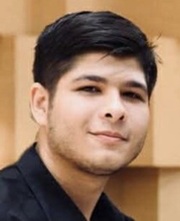
Interview
1- You completed your Postgraduate Advanced Diploma at Trinity Laban Conservatoire of Music and Dance. How do you recall this time and the masters who guided you?
My time at the Trinity was busy yet rewarding. I was chosen to participate in the Wigmore Hall Masterclass series with Michael Collins, CoLab Festival, Animate Orchestra where it combines dance moves with music, as well as giving solo, chamber and orchestral performances across London. The experience studying with Michael Whight, the former Principal Clarinet of the Royal Philharmonic Orchestra and currently a music producer, has helped refining my playing thus transforming my musicianship and performance skills to the next level. His profound knowledge especially on orchestral excerpts and the attention to details have inspired me to approach music in different ways. I also studied with Joan Enric Lluna, an internationally acclaimed clarinettist. We focused mainly on sound production and music interpretation as a solo musician. I am grateful for the support from Trinity and the clarinet faculty.
2- Is your family musical?
None of my family is a musician, but my Dad has a great interest in Cantonese Pop-music.
3- You were a finalist at the Royal Over-Seas League Competition 2020 with your wind quintet Pacific Winds. Can you identify your fellow musicians please and what brought you together?
My quintet Pacific Winds comprises flautist Sirius Chau, oboist Inoko Isobe, bassonist Hugo Mak, hornist Alfred Lee and myself. I met some of the group members at the Taipei Music Academy and Festival in 2019 and since we share similar values on performing, we decided to form a wind quintet in London. Having only played as an ensemble for a year, we feel extremely honoured to be one of the finalists at the prestigious ROSL Competition.
4- You won a full scholarship to participate in the Taipei Music Academy & Festival where you studied with John Bruce Yeh, the Assistant Principal Clarinettist at Chicago Symphony Orchestra. How was this experience like?
Mr Yeh is known for his extraordinary music expression in his playing and his focus on musical details. I am deeply inspired by him and he has helped to challenge my technique and to express myself through the clarinet. Throughout the Festival, we listened to concerts performed by renowned musicians, for instance David Chan from the Metropolitan Opera Orchestra and Emily Beynon from the Royal Concertgebouw Orchestra. We had the precious opportunity to play alongside these great musicians and receiving coaching from them. The experience has stayed with me as one of the best music-making moments.
5- What are your fondest musical memories, privately or performing?
One of my fondest musical memories was my first performance with the Royal Northern College of Music Bass Clarinet Choir. We have TWENTY students and professors playing bass clarinets and contra-bass clarinets, which are rather rare. The hall was being filled with low frequencies which was very satisfying to be surrounded by that.
6- How often do your practice?
As Jascha Heifetz said “If I don't practice one day, I know it; two days, the critics know it; three days, the public knows it.” So Everyday!!
7- You are also an enthusiastic educator with experience working with the London Symphony Orchestra Discovery and other groups. Can you give us a bit more detail on this work and what you get out of it?
I am always impressed by what music can bring to people. Music can be a tool for learning, releasing stress, enhancing our well-being and bringing us happiness. With the LSO Discovery, we started the session with some rhythm games to break the ice and started looking at the theme of the workshop meanwhile using music as a medium to create, connect and express the ideas.
8- Who would your dream accompanist be, from the present or past?
I have been very fortunate to work with great accompanists from the Royal Northern College of Music and Trinity Laban. Through the collaboration with great musicians, I realised I particularly enjoy making music with pianists who are sensitive, interactive and a good sense of humour might help!
9- What advice would you give to young musicians at the start of their journey?
There is always light at the end of the tunnel, so keep practicing!