Interview
1- You are currently pursuing the Artist Diploma in Piano Performance at the Royal College of Music, where you study with Dmitri Alexeev. How is this progressing?
My time at the Royal College of Music is an exciting new chapter in my musical development. Working with Dmitri Alexeev is giving me the opportunity to look at familiar repertoire from new perspectives, while also encouraging me to develop greater freedom, depth and individuality in my playing. I am particularly interested in finding the balance between respecting the composer’s intentions and allowing my own voice to emerge naturally.
2- Is your family musical?
There is no professional musical background in my family, so my decision to become a pianist was not something that was planned from the beginning. I actually discovered the piano relatively late, at the age of twelve, after hearing a Chopin Mazurka. That experience completely changed the direction of my life. From that moment onwards, I became increasingly fascinated by the instrument and by the world of classical music.
3- You completed a Master’s degree in Piano Performance at the Conservatorium van Amsterdam with Naum Grubert and studied fortepiano with Olga Pashchenko. How did these masters influence and guide you?
My studies in Amsterdam were fundamental in shaping me as a musician. Naum Grubert encouraged me to look beyond technical perfection and search for greater depth, structure and meaning in music. Studying fortepiano with Olga Pashchenko gave me another perspective on articulation, sound production and historical performance practice. Having these two approaches alongside each other taught me to think more deeply about the relationship between instrument, repertoire and interpretation.
4- You have received more than twenty prizes at national and international competitions. Which one particularly stands out for you?
The Dinu Lipatti International Piano Competition in Bucharest is particularly close to my heart. In 2025, I was awarded Third Prize and was the only Romanian finalist. I also had the opportunity to perform with the Radio Chamber Orchestra at Sala Radio, which made the experience especially memorable.
What made it even more meaningful was the connection with Dinu Lipatti himself. His extraordinary refinement and deeply personal approach to music have always resonated with me. As a Romanian pianist who began his musical journey in Italy and later returned to Romania to continue his studies, performing in a competition bearing Lipatti’s name felt like a meaningful connection with an important part of my musical heritage. For me, the experience was about much more than the result: it was about the music, the atmosphere, and the feeling of sharing something deeply connected to my roots with a Romanian audience.
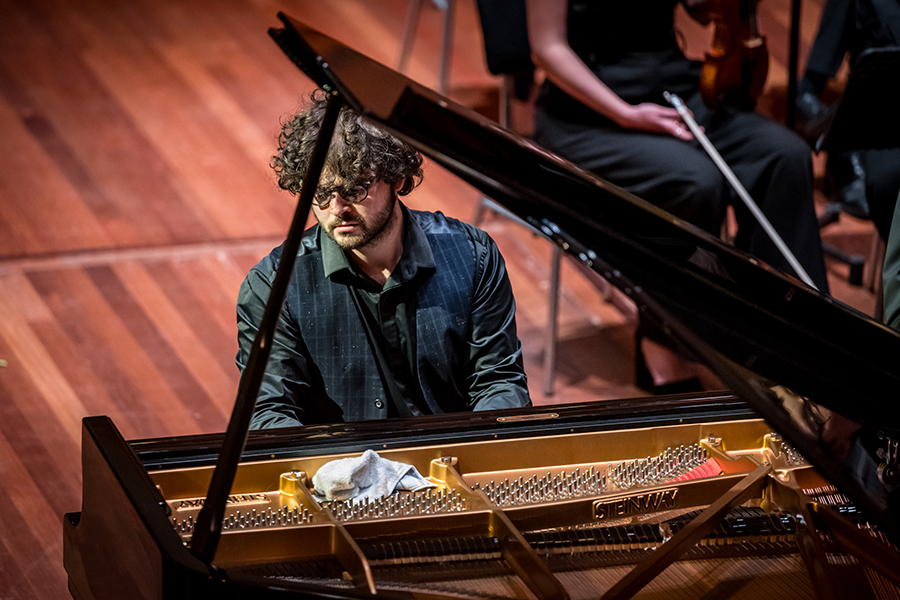
5- You performed Grieg’s Piano Concerto with the Conservatorium van Amsterdam Symphony Orchestra under Ed Spanjaard at the Haarlem Philharmonie, as part of the Keys of the Future festival. How was this received by the audience over there?
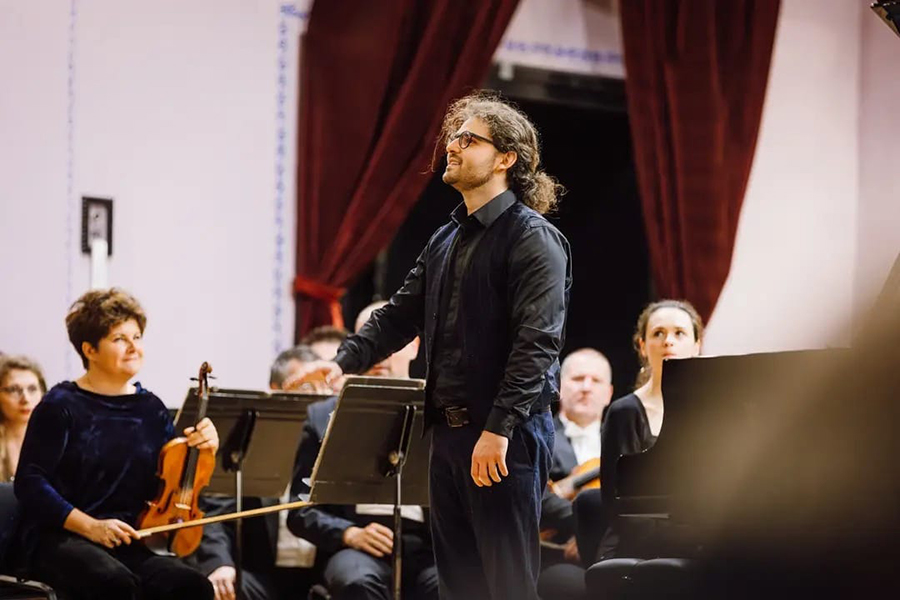
It was a very special experience for me. The audience responded with remarkable warmth, and we received a standing ovation at the end of the performance. But what I remember most is the feeling that, for those few minutes, there was a genuine connection between what I was trying to express and what the audience was receiving.
For me, performing is ultimately about sharing something personal through the music. I don't want the audience simply to hear the notes; I want them to feel that I am telling them something that matters to me. That evening in Haarlem, I felt that connection very strongly. The response from the audience was deeply moving because it felt like they had understood and connected with the story I was trying to tell through Grieg’s music.
6- What are your fondest musical memories, privately or performing?
Some of my fondest memories come from moments when a performance feels less like a presentation and more like a genuine conversation with the audience. My debut at the Romanian Athenaeum performing Rachmaninoff’s Third Piano Concerto was one such moment. I also treasure quieter experiences: discovering a new piece during practice, playing chamber music with close colleagues, or performing for a small audience where you can feel every reaction in the room.
7- How often do you practice?
I try not to think only in terms of hours, but rather in terms of what I want to achieve during a practice session. On a normal day I may practise for several hours, divided between technical work, repertoire and more concentrated musical exploration. I find that focused practice is much more valuable than simply spending a certain number of hours at the piano.
8- Would you consider teaching in the future?
Absolutely. Teaching has already been an important part of my life as a musician, and I enjoy the process of helping students discover their own relationship with music. I would like to continue teaching alongside my performing career. For me, good teaching is not about creating a copy of the teacher, but about helping each student develop their own musical voice, curiosity and confidence.
9- Who would your dream accompanist be, from the present or past?
There are so many extraordinary musicians I would love to collaborate with, but if I could choose someone from the past, I would have loved to make music with Sviatoslav Richter. His approach to music was so profound and individual, and I imagine that working together would have been an extraordinary musical conversation.
10- What advice would you give to young musicians at the start of their journey?
I would tell them not to be afraid of having their own path. There is no single correct timeline for becoming a musician, and everyone's journey is different. It is important to work seriously and consistently, but also to remain curious and remember why you started playing music in the first place. Competitions, auditions and achievements are important parts of the profession, but ultimately what stays with an audience is the story you are able to tell through the music.